
Tribute • Para los Maestros
Homenaje
A tribute to the legends whose voices, rhythms, and spirit shaped Ronkalunga’s sound — the giants of Cuban music whose songs still echo from Baracoa to Havana to the world.
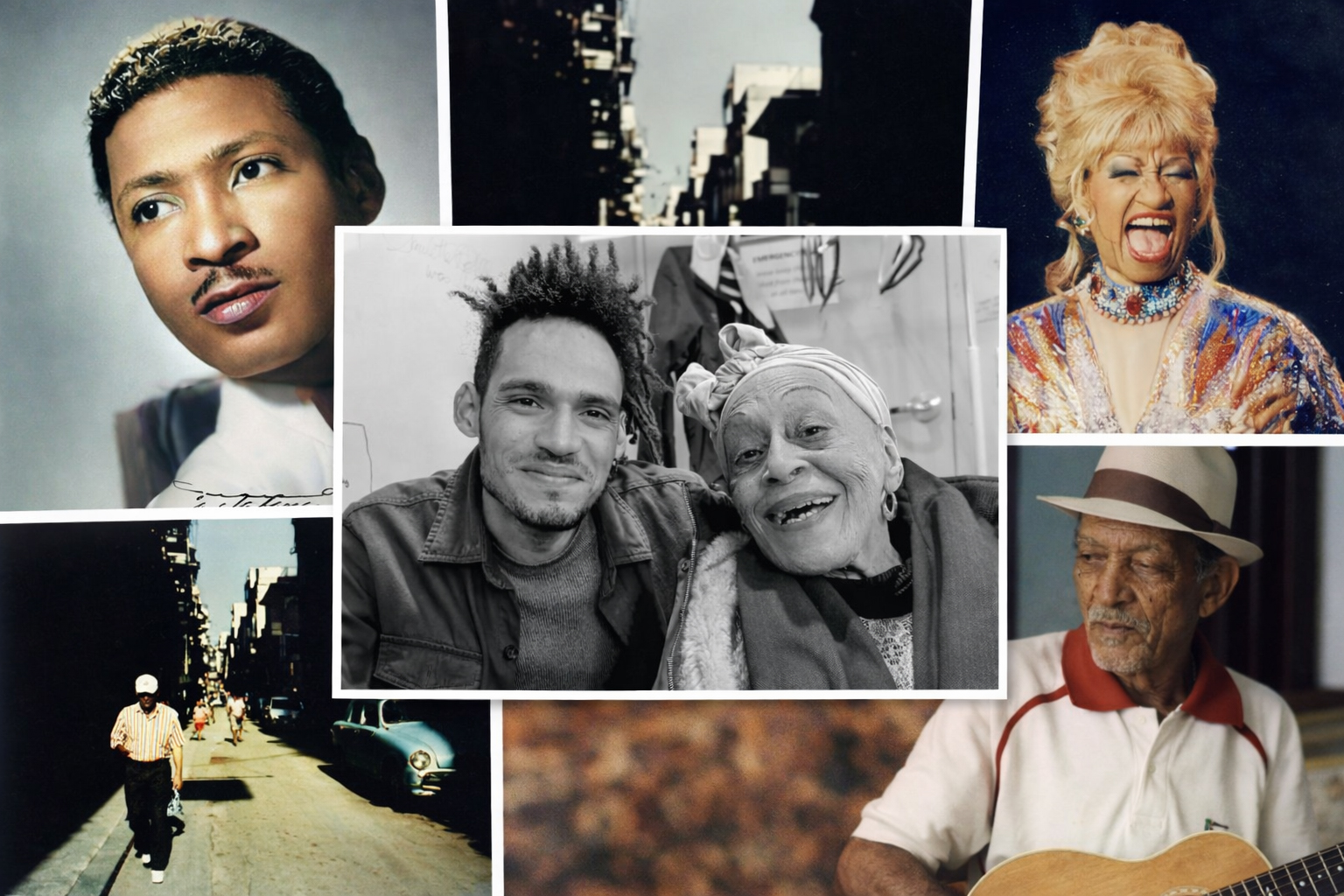
Los Maestros
Beny Moré
1919 — 1963El Bárbaro del Ritmo
Cuba’s mid-century vocal giant. A master of son, mambo, and bolero who led the legendary Banda Gigante orchestra and remains the gold standard against which every Cuban singer is measured. His voice carried Cuban music from the dance halls of Havana to the world.
Compay Segundo
1907 — 2003Maestro del Son
Singer, guitarist, and inventor of the seven-string “armónico.” Composer of “Chan Chan” — son cubano’s most globally recognized song — and the soulful elder voice at the heart of the Buena Vista Social Club revival, performing into his nineties.
Buena Vista Social Club
est. 1996La Reunión Que Cambió Todo
The Grammy-winning 1997 album and Wim Wenders documentary that reintroduced Cuba’s elder masters — Compay Segundo, Ibrahim Ferrer, Rubén González, Eliades Ochoa, Omara Portuondo — to the world. Producer Ry Cooder helped spark a global revival of traditional Cuban music.
Celia Cruz
1925 — 2003La Reina de la Salsa
The Queen of Salsa. Her thundering “¡AZÚCAR!” became a universal symbol of Cuban joy. From La Sonora Matancera in the 1950s through her Fania All-Stars era and beyond — dozens of albums, multiple Grammys, an unrivaled career in Latin music.
Omara Portuondo
b. 1930La Novia del Feeling
A founding voice of Cuban filin and one of bolero’s most beloved interpreters. She rose to international fame through Buena Vista Social Club and continues to perform today — a living bridge between Cuba’s golden era and the present.
Emilio Estefan
b. 1953El Padrino de la Música Latina
Cuban-born producer, songwriter, and musician who brought Latin music to global mainstream audiences. Founder of Miami Sound Machine, 19-time Grammy winner, and the architect behind the careers of Gloria Estefan, Shakira, Ricky Martin, Jon Secada, and many more. Awarded the Presidential Medal of Freedom in 2015.
Por la Música, Por Cuba
Every note Ronkalunga sings carries a piece of these voices. From the changuí of Baracoa to the bolero of Havana, from the salsa of New York to the trova of the world — this is the lineage. This is the inheritance.
Que vivan los maestros.